
Best Solar Battery Size for UK Homes
5 kWh, 10 kWh, or more? The right battery size depends on your evening usage, solar system output, and budget. Here's how to work it out — with real household examples.
Quick sizing rule of thumb
A simple starting point: your battery should hold roughly the same number of kWh as you use between sunset and sunrise. For most UK homes, that's 5–10 kWh.
If your electricity bill shows daily usage of 8–12 kWh and roughly half of that happens in the evening and overnight, a 5–6 kWh battery covers the basics. If you have higher evening demand — electric cooking, EV charging, a large household — look at 9–13.5 kWh.
Match battery size to your evening usage
Your evening and overnight electricity consumption is the single most important number. A battery that matches this means you can run your home on stored solar from the moment your panels stop generating until they start again the next morning.
- Low evening use (3–5 kWh) — couple or small household, gas heating and hob, early bedtime. A 5 kWh battery is plenty
- Moderate evening use (5–8 kWh) — family of 3–4, dishwasher and washing machine in the evening, TV and lighting. A 6–8 kWh battery is ideal
- High evening use (8–12 kWh) — larger family, electric cooking, home office, multiple devices. A 9.5–13.5 kWh battery makes sense
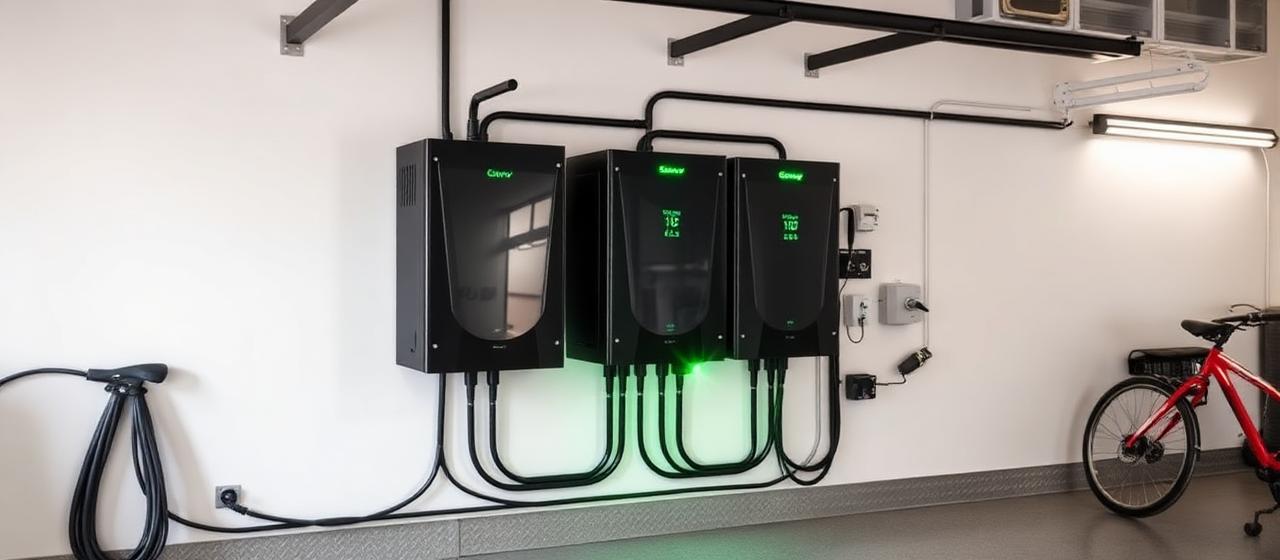
- Very high use (12+ kWh) — electric heating, EV charging overnight, hot tub. Consider stacking modular batteries (e.g. 2× GivEnergy units)

Match battery size to solar system size
Your solar panels need to generate enough surplus during the day to actually fill the battery. There's no point buying a 13.5 kWh Tesla Powerwall if your 2 kW system only produces 4–6 kWh of surplus on a good day.
As a guide, your battery capacity should be roughly 1–1.5× the daily surplus your panels produce after you've used what you need during the day:
- 2–3 kW solar system → 3–5 kWh battery (daily surplus: 3–5 kWh in summer)
- 3–4 kW solar system → 5–8 kWh battery (daily surplus: 5–9 kWh in summer)
- 4–5 kW solar system → 8–10 kWh battery (daily surplus: 7–12 kWh in summer)
- 5–6 kW+ solar system → 10–13.5 kWh battery (daily surplus: 10–16 kWh in summer)
Typical household examples
Here's what we'd typically recommend based on common UK property types. These assume gas central heating and a standard electricity tariff:
- 2-bed flat or terrace — 2–3 kW panels, 3–5 kWh battery. Evening use ~4 kWh. Budget option: Fox ESS 5.2 kWh. Annual saving with battery: £400–£700
- 3-bed semi — 3–4 kW panels, 5–8 kWh battery. Evening use ~6 kWh. Popular choice: GivEnergy 5.2 or 9.5 kWh. Annual saving with battery: £600–£1,100
- 4-bed detached — 4–6 kW panels, 9.5–13.5 kWh battery. Evening use ~8–10 kWh. Popular choice: GivEnergy 9.5 kWh or Tesla Powerwall. Annual saving with battery: £800–£1,500
- Large home with EV — 5–6 kW+ panels, 13.5+ kWh battery or stacked modules. Evening use 12+ kWh. Consider dual GivEnergy units for 19 kWh total. Annual saving with battery: £1,200–£2,000+
Oversizing vs undersizing: what happens?
Neither extreme is ideal, but undersizing wastes more potential savings than oversizing wastes money:
- Undersized battery — fills up quickly and the rest of your surplus is exported at 4–15p/kWh instead of saving you 24–28p/kWh. You miss out on the biggest financial benefit of battery ownership
- Oversized battery — never fully charges on average days, so you've paid for capacity you rarely use. Not harmful, but your payback period stretches out. Modular systems avoid this by letting you start smaller
- Seasonal variation — a battery that's slightly too large in winter will be well-utilised in summer when solar generation is 3–4× higher. Sizing for shoulder months (March–April, September–October) usually hits the sweet spot
- Smart tariff buffer — if you're on a time-of-use tariff, a slightly larger battery lets you charge more overnight at cheap rates, improving the return even on low-solar days
Battery size and backup power
If keeping your lights on during a power cut is important to you, battery size matters even more. Most batteries can provide Emergency Power Supply (EPS) — but how long they last depends on capacity and what you're running.
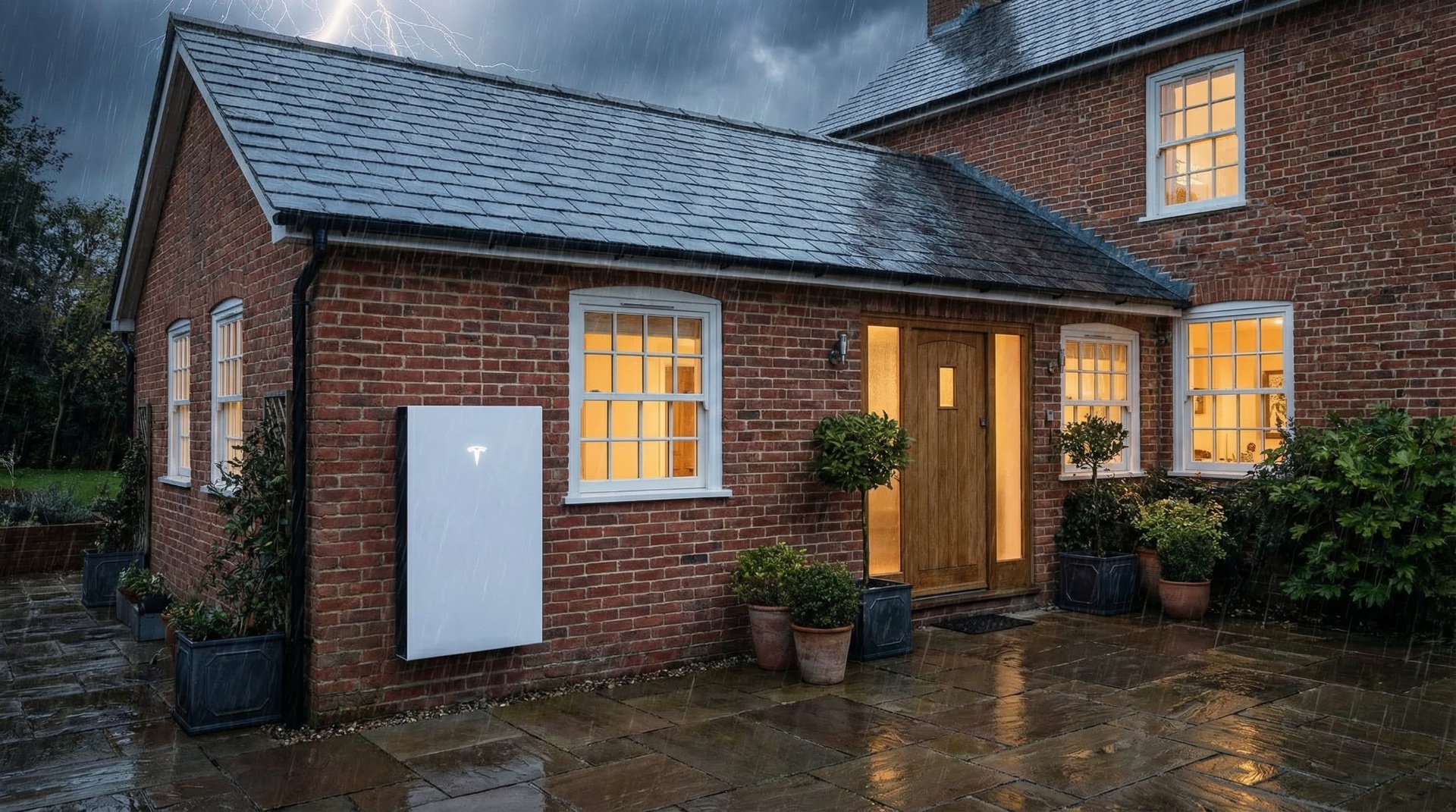
A 5 kWh battery running essential loads (lights, fridge, router, phone charging — roughly 500 W) will last about 8–10 hours. A 13.5 kWh Tesla Powerwall could keep those essentials running for over 24 hours. If backup power is a priority, size up rather than down — and discuss EPS wiring with your installer, as it requires a dedicated circuit.
Ready to get started?
Get a free, no-obligation quote from our team. We'll help you find the best solution for your home.