
Solar Panel System Size Guide
How to choose the right solar system size for your home in 2026 — with current panel wattages, output data, and roof space requirements.
What size system do most homes need?
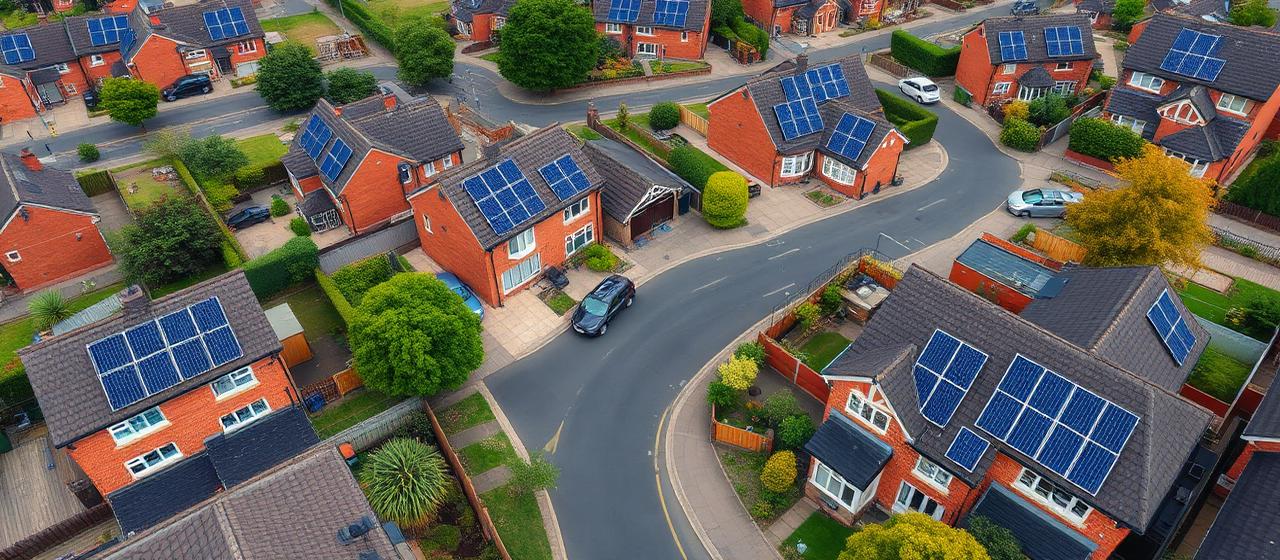
The average UK household uses around 3,400 kWh of electricity per year. A south-facing solar system generates approximately 900 kWh per kWp installed annually. The 2024 average domestic installation was 4.6 kWp according to MCS data — enough to cover 100%+ of a typical home's annual consumption, though generation and usage patterns rarely align perfectly.
System size comparison (2026 prices)
Today's residential panels are typically 400–450W each, meaning fewer panels are needed for the same output compared to a few years ago. All prices include 0% VAT.
- 2 kW – 5 panels (400W), ~10 m² roof space, suits flats or small terraces (£3,500–£5,000)
- 3 kW – 7–8 panels, ~14–16 m², suits most terraced homes (£5,000–£7,500)
- 4 kW – 9–10 panels, ~18–20 m², suits semi-detached homes (£5,500–£9,000)
- 5 kW – 12 panels, ~24 m², suits detached homes with higher usage (£7,500–£10,500)
- 6+ kW – 15+ panels, ~30+ m², suits large homes or those adding EV charging (£9,000–£12,000+)
Factors that affect system size
A professional site survey will assess all of these factors and recommend the optimal system for your specific home:
- Available roof space and orientation — south-facing is ideal, but east/west works well too
- Shading from trees, chimneys, or neighbouring buildings (even partial shading reduces output)
- Your household electricity consumption patterns (daytime vs evening usage)
- Whether you plan to add a battery, EV charger, or heat pump
- Budget and available funding — larger systems offer better per-kW value
Panel technology trends
Residential panels have advanced rapidly. In 2026, standard panels are 400–450W with efficiencies of 20.7–22.5% — up from 250–350W just a few years ago. Leading manufacturers like DMEGC, JA Solar, and Perlight produce panels with higher wattage per m², meaning you can generate more power from less roof space. This is especially valuable for terraced homes or properties with limited south-facing roof area.
Related pages
Ready to get started?
Get a free, no-obligation quote from our team. We'll help you find the best solution for your home.