
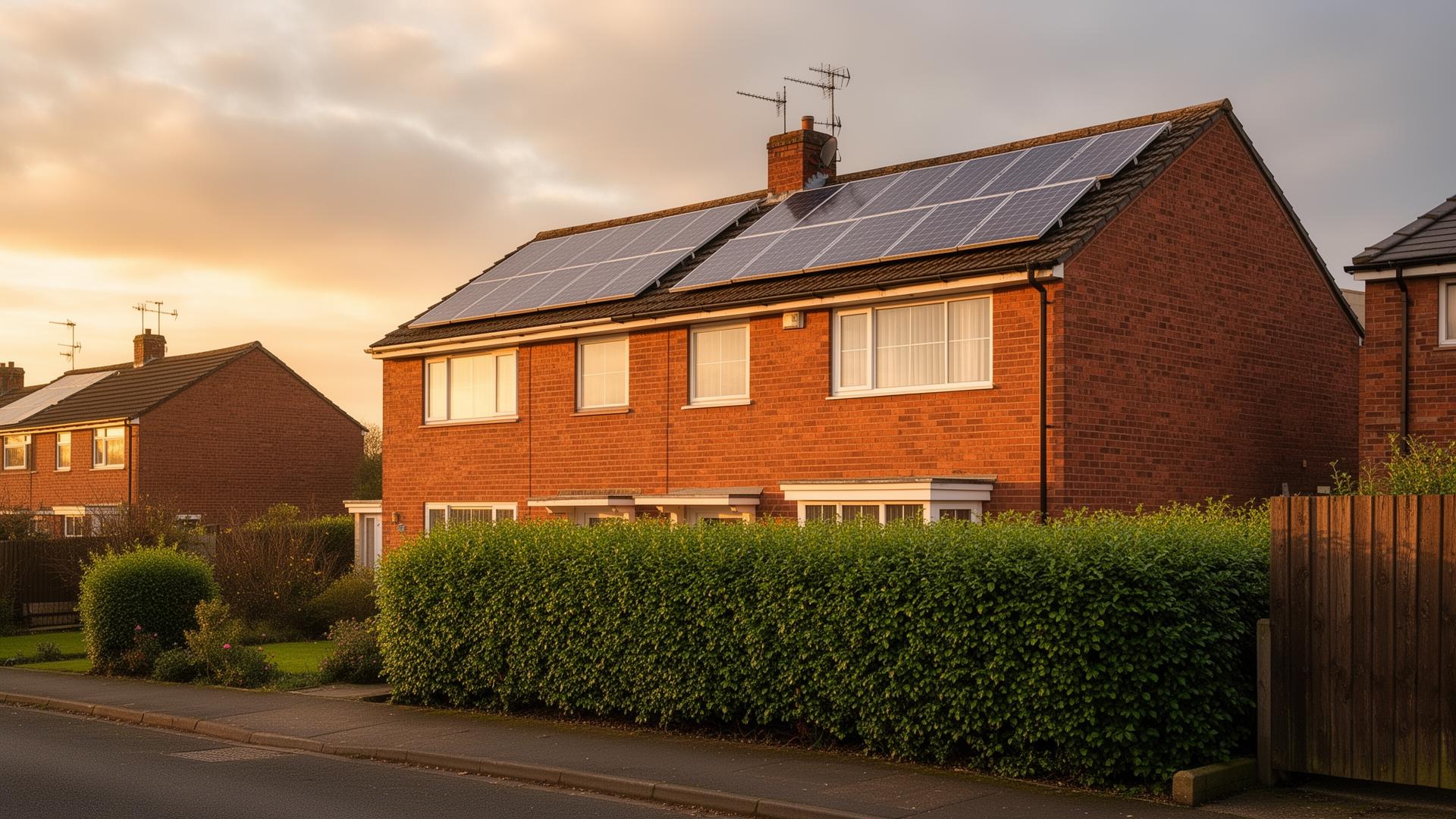
Solar Panels
Everything you need to know about residential solar panels in 2026 — how they work, current costs, real-world savings, and whether they're right for your home.
How do solar panels work?
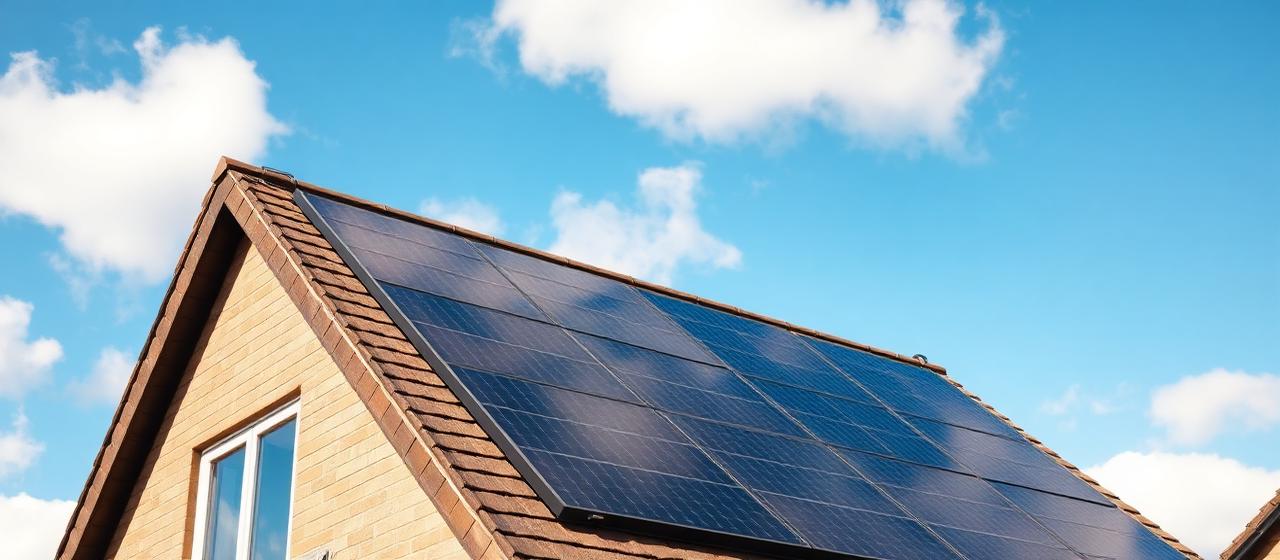
Solar panels convert sunlight into electricity using photovoltaic (PV) cells. Modern panels use monocrystalline silicon cells with efficiencies of 20–22%, meaning they generate usable power even on overcast days. The electricity powers your home directly, reducing what you buy from the grid. Any surplus is exported and you're paid through the Smart Export Guarantee (SEG), currently offering rates from 4p to 17.5p per kWh depending on your supplier and tariff.

Are solar panels worth it in 2026?
Yes — and more than ever. Panel prices have dropped 17% since 2023, and all residential installations are VAT-free until at least 2027, saving homeowners £1,000–£3,000. A typical 4 kW system now costs £5,500–£8,000 fully installed and saves £500–£1,200 per year on electricity bills.
With electricity prices around 24–28p per kWh and panels lasting 25–30 years, the payback period is typically 6–9 years — leaving 15–20+ years of pure savings. Add a battery and SEG income, and total annual savings can reach £1,000–£1,500.
What size system do I need?
The average UK household uses around 3,400 kWh of electricity per year. A south-facing system generates approximately 900 kWh per kWp installed. Most homes suit a 3–5 kW system — the 2024 average domestic installation was 4.6 kWp according to MCS data. Today's panels are typically 400–450W each, so a 4 kW system needs just 9–10 panels.
Adding battery storage
Without a battery, you'll use around 30–50% of the solar energy you generate. Adding a home battery (5–10 kWh) increases self-consumption to 70–90%, boosting annual savings by £300–£800. Battery costs have also fallen — a 9.5 kWh GivEnergy system costs around £4,500–£5,500 installed. Smart tariffs like Octopus Agile can add further value by letting you charge cheaply overnight.
Design your solar system
Choose your options below and see an instant estimate — prices include installation, scaffolding, and MCS certification.
What are you looking for today?
The minimum is 2, average is 10, more than 20 is unusual. You'll need around 20 m² of roof space. A typical 3 bed home has 25m².
Not sure? Pick 'Smart battery' and our team can help — or explore the options.
Prices are indicative estimates for typical UK installations in 2026 and include all labour, materials, scaffolding, and MCS certification. Final pricing depends on your roof, location, and specification. 0% VAT applies to residential installations until at least March 2027.
Ready to get started?
Get a free, no-obligation quote from our team. We'll help you find the best solution for your home.